Information
- Page: https://palac-lubostron.pl/
- Facebook: PalacLubostron/
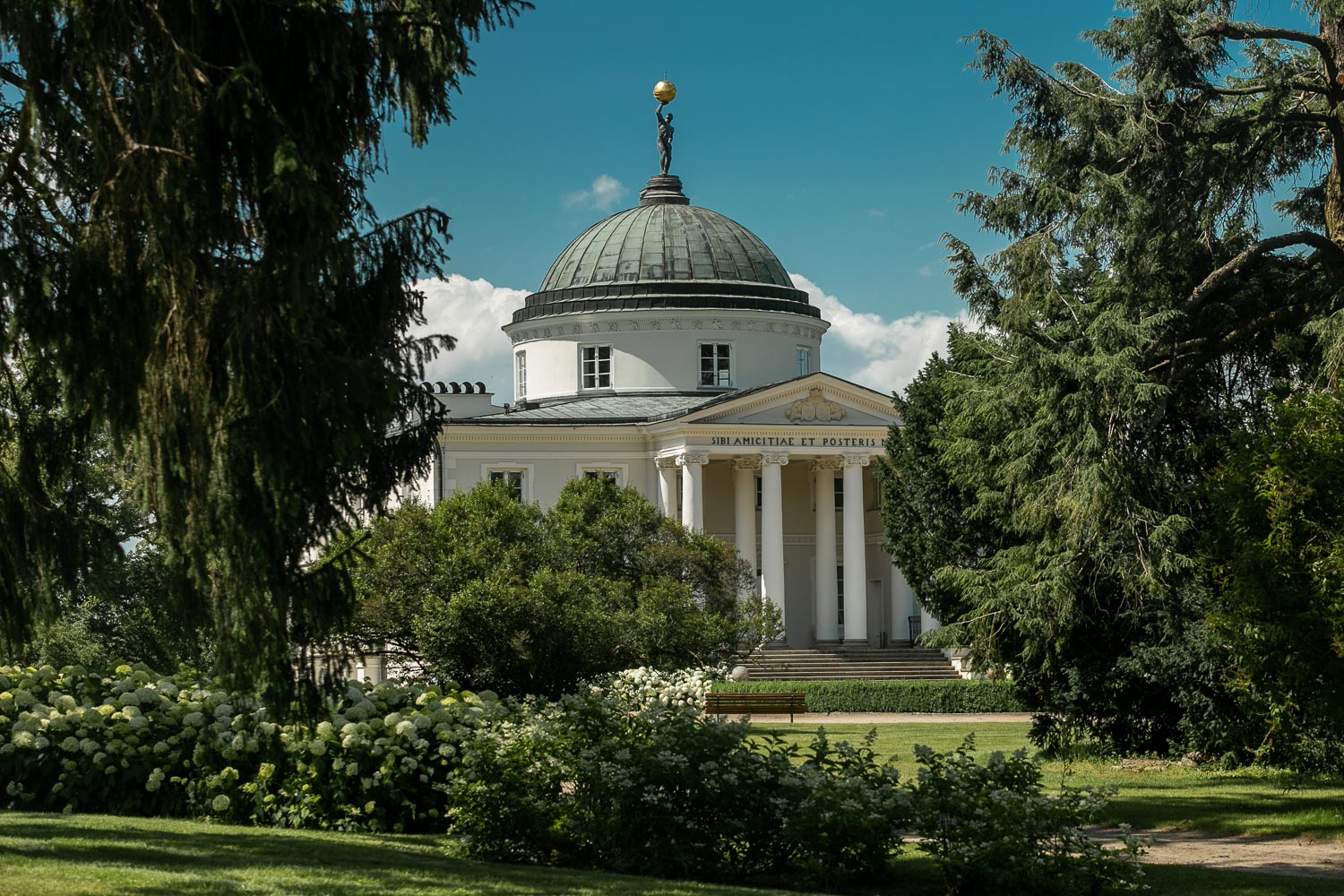
In the "heart of a pleasant retreat", as Count Fryderyk Skórzewski used to call his estate, a palace was built at the end of the 18th century. Today it is considered a pearl of Polish classicism and one of the best-preserved residential complexes in Poland. The majestic residence resembles the Renaissance Villa Rotonda in Vicenza by the Italian architect Andrea Palladio. The palace dome is decorated with a sculpture of Atlas carrying the globe. On the frieze of the tympanum of the portico there is a Latin motto: SIBI, AMICITIAE ET POSTERIS MDCCC. (TO MYSELF, FRIENDS AND PROSCIOUSNESS 1800). The interior design of the palace proves the great patriotism of the owners. The floor of the rotunda hall, intricately made of multi-colored wood, is decorated with the coats of arms of Poland (Eagle) and Lithuania (Pogoń). Its walls are decorated with, among others, four bas-reliefs depicting: King Władysław Łokietek with the knight Florian the Gray on the battlefield of Płowce, Queen Jadwiga receiving the Teutonic envoys in Inowrocław, the victory of the Polish Army over the Teutonic Knights in the Battle of Koronowo, and Marianna Skórzewska and Frederick the Great with a map of the Bydgoszcz Canal. Lubostroń was not only the residential residence of the Skórzewski family, but also a mainstay of national life, a meeting place for people of science and art. It hosted representatives of the most distinguished aristocratic families - the Radziwiłł, Czartoryski, Lubomirski, Branicki, Talleyrand- Perigord families .
The palace and the manor buildings are immersed in the greenery of a 40-hectare historic park in the English style. Park avenues covered with beautiful trees will take you to extraordinary places. One of them is a picturesque pond, at the shore of which there is a small cave with a statue of the Virgin Mary.
Gallery