Information
- Address: Przedzamcze 3, 87-100 Toruń
- Page: https://www.tak.torun.pl/zamek/
- Facebook: zamektorun/?locale=pl_PL
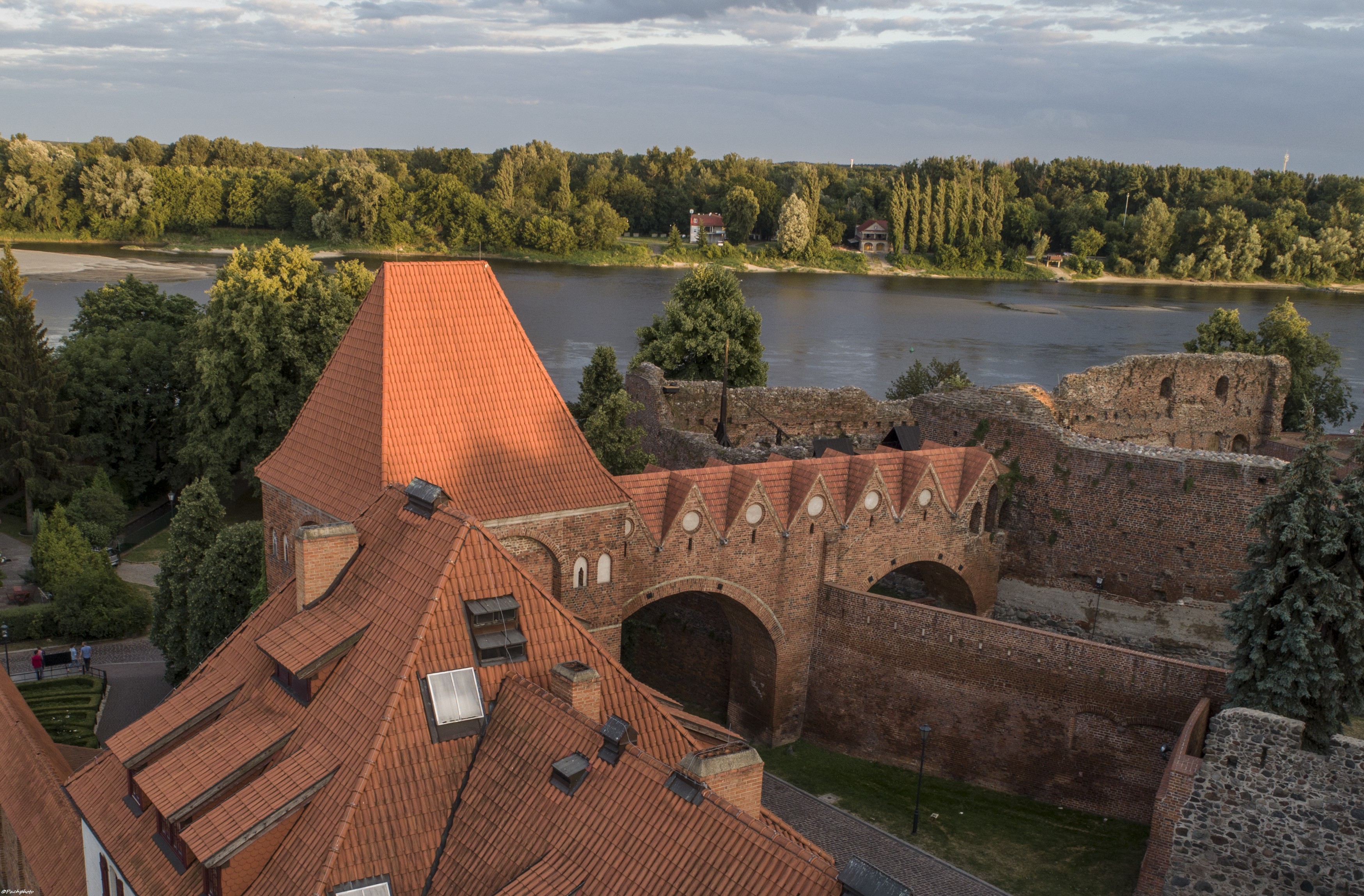
The origins of today's Toruń are related to the arrival of knights of the Teutonic Order to the Chełmno region in 13th century. At that time they started building their castle on the site of a previously existing defensive stronghold, which resulted in the shape, unusual for the castles of the Teutonic Order, resembling a horseshoe. Behind the high wall was build the main castle with a chapel, refectory, chapter house and dormitory. A high tower was erected in the courtyard, serving as the last defense and observation point, cloisters and a well. In order to prevent any water pollution, a high tower called " Gdanisko " was located outside the walls, which was used as a castle toilet and place of defense. The Toruń stronghold thanks to its location on the border with Poland, was one of the most important castles in the Teutonic state and was never conquered by foreign invaders. Its end came with the anti-Teutonic uprising which broke out in 1454. The townspeople of Toruń, opposing the policy pursued by the Order, attacked and took control over the castle, giving a signal to other Prussian cities to rise against the Teutonic Knights. The castle crew was taken out of the city and the castle was demolished. And so the Order's authority over Toruń, which had lasted over 200 years, ended, and the Thirteen Years' War that began thus finally caused the annexation of the city and the entire Pomerania region to Poland.
Today we can admire the preserved ruins of the castle - the lower parts of the main castle, elements of the moat and tower " Gdanisko ". They create an extremely picturesque setting for many events in Toruń.
Related routes

Gallery