Information
- Address: Filarecka 2, Bydgoszcz
- Page: https://muzeum.mwik.bydgoszcz.pl/
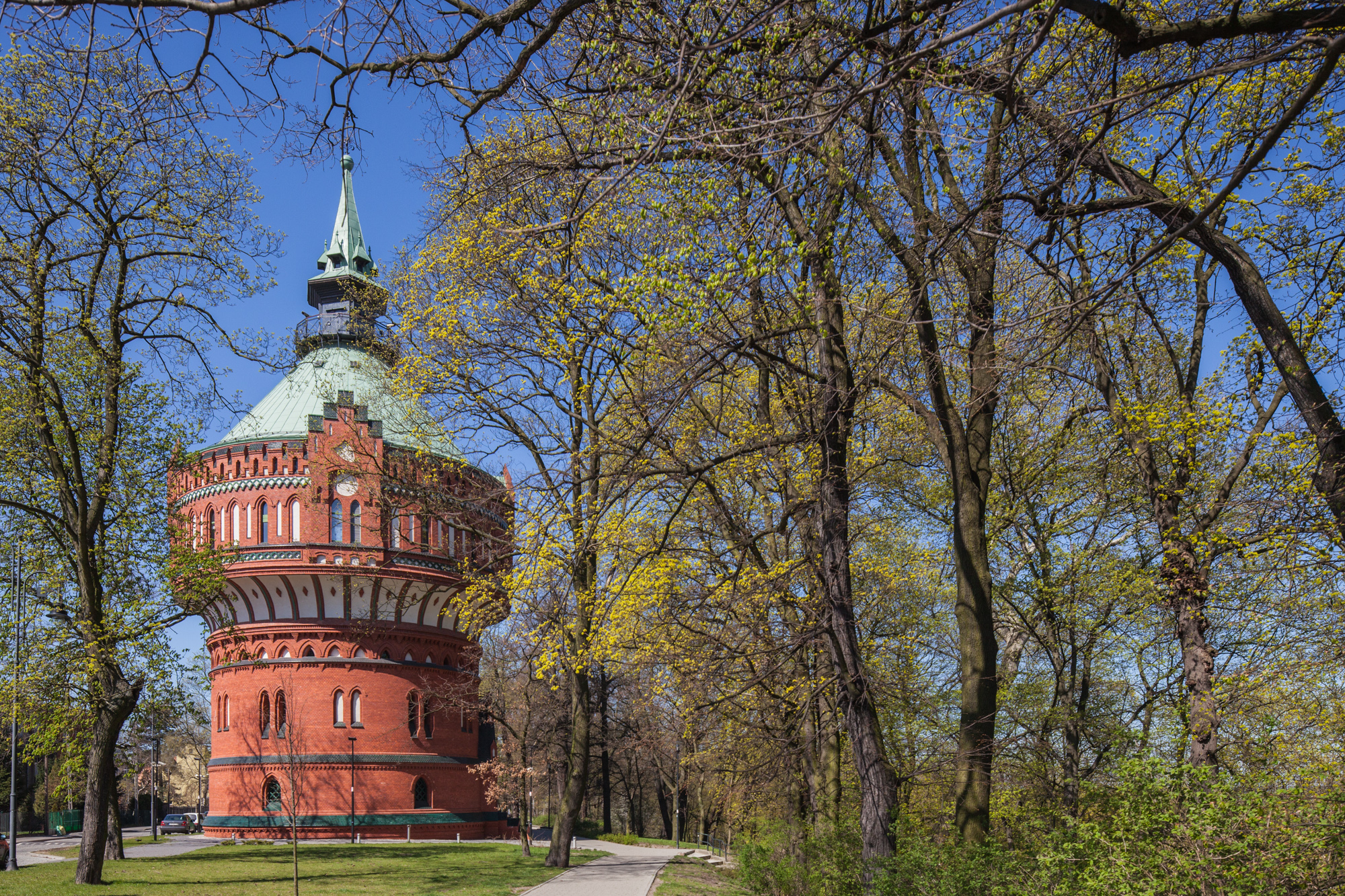
Located within the Las Gdański water intake area, the Pump Hall and the associated Water Tower are now monuments of industrial architecture from the turn of the 19th and 20th centuries. They house Poland's first Waterworks Museum.
The Water Tower, opened in 1900, was built in an attractive part of the city, in a park situated on a hill adjacent to the Old Town, making it a viewpoint from the beginning. Its primary function was to ensure a steady water supply. The tower was a crucial element of a simple, single-zone water supply network. Water drawn from aquifers in the Las Gdański Forest was pumped into the tower using suction and force pumps powered by gas engines. The equalizing tank, with a capacity of 1260 m³, balanced the fluctuations between water production and consumption, allowing the city to have a continuous water supply without interruptions. The tower served this purpose until 1990 when it was decommissioned from the water supply system.
Today, the tower serves as a museum. Inside, you can see wooden water pipes, water tokens, elements of old bathroom and toilet fixtures, archival photos, and documents. The museum not only presents the history of Bydgoszcz's waterworks but also explores methods of water acquisition and usage from ancient times to the present. At the top of the tower is an observation deck offering a beautiful panorama of Bydgoszcz.
Gallery