Information
- Page: https://www.inowroclaw.pl/
- Facebook: uminowroclaw/
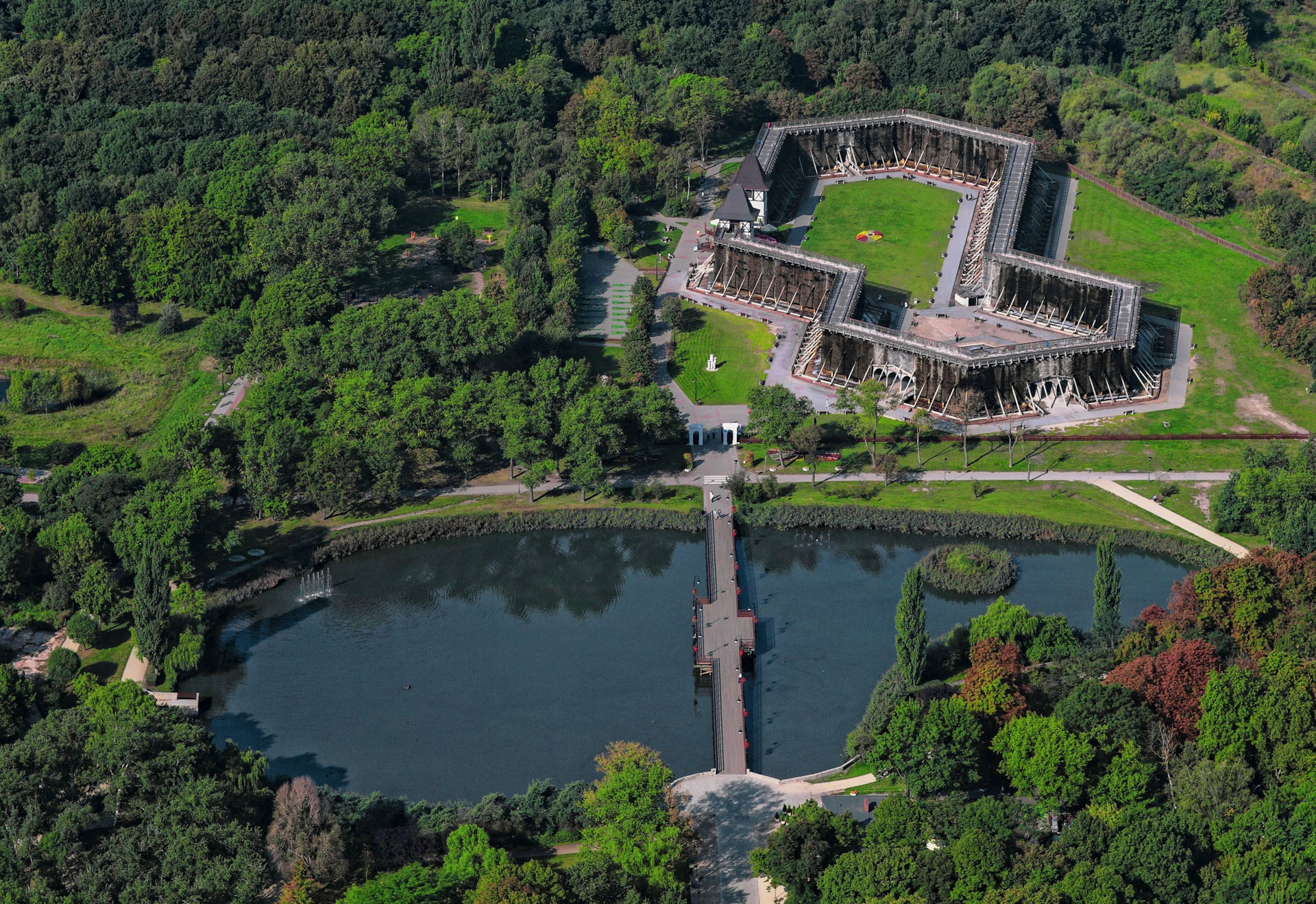
Entering the Saline Park, you cross the border between the everyday rhythm of the city and the green zone, where time is measured by deep breaths and unhurried walking. The characteristic towers guarding the graduation tower in Inowrocław invite you to a zone of blissful relaxation. Its shape is created by two interconnected polygons, around which a beneficial brine aerosol floats. Take a deep breath and feel the healing power of the local air. Visit the Water Pump Room and taste the mineral water "Inowrocławianka" and the medicinal water "Jadwiga". Experience some exoticism in the Palm House and learn about folklore in the stylized Kujawska Cottage.
The basement of the Municipal Theater building will take you straight to the Inowrocław salt mine. The extraordinary history of Kuyavian salt producing awaits you there . One of the most valuable monuments in Inowrocław is the Romanesque Blessed Virgin Mary Church. The bas-reliefs on its walls, depicting images of human heads and animals, have been a source of speculation and legend for years.
Apparently, no one wrote so beautifully about the Kujawy land as Jan Kasprowicz. To learn about the life and work of one of the most outstanding Polish poets, born in Szymborz (today a district of Inowrocław), it is worth visiting the Museum of Jan Kasprowicz. One of the exhibitions will also introduce you to the figure of the " Meteor of Young Poland" by Stanisław Przybyszewski. Among the valuable souvenirs you will find copies of manuscripts, archives and first editions of the writer's works.
“Przywołówki dyngusowe “are an old custom associated with the celebration of Easter in Kujawy. It is still practiced in Szymborz , a former village, now a district of Inowrocław. Those are the short, rhymed poems, praising the virtues or rebuking the vices of young ladies, containing an announcement about the holiday awaiting them, delivered on Easter Sunday. Their creators are members of the Bachelor's Club Association, whose origins date back to the turn of 1833 and 1834. In 2016, the “Przywołówki dyngusowe” in Szymborz were entered on the National List of Intangible Cultural Heritage.
Gallery