Information
- Page: ttps://grudziadz.pl/?fbclid=IwZXh0bgNhZW0CMTAAAR2A0-KKtV5k-GWqmAYEUjYxGKb8vuF4Xnv4Xu6WuJnJmGRPTIvtJTHdSBA_aem_AUiEjsFjMn-V5jWyf-dgvRiL0AbtL4vfdF0guDyR3Z81E8PnFLFzFHb0wIRoYucryeWdGOH3oIvq0MPahQ66KZE6
- Facebook: gminagrudziadz
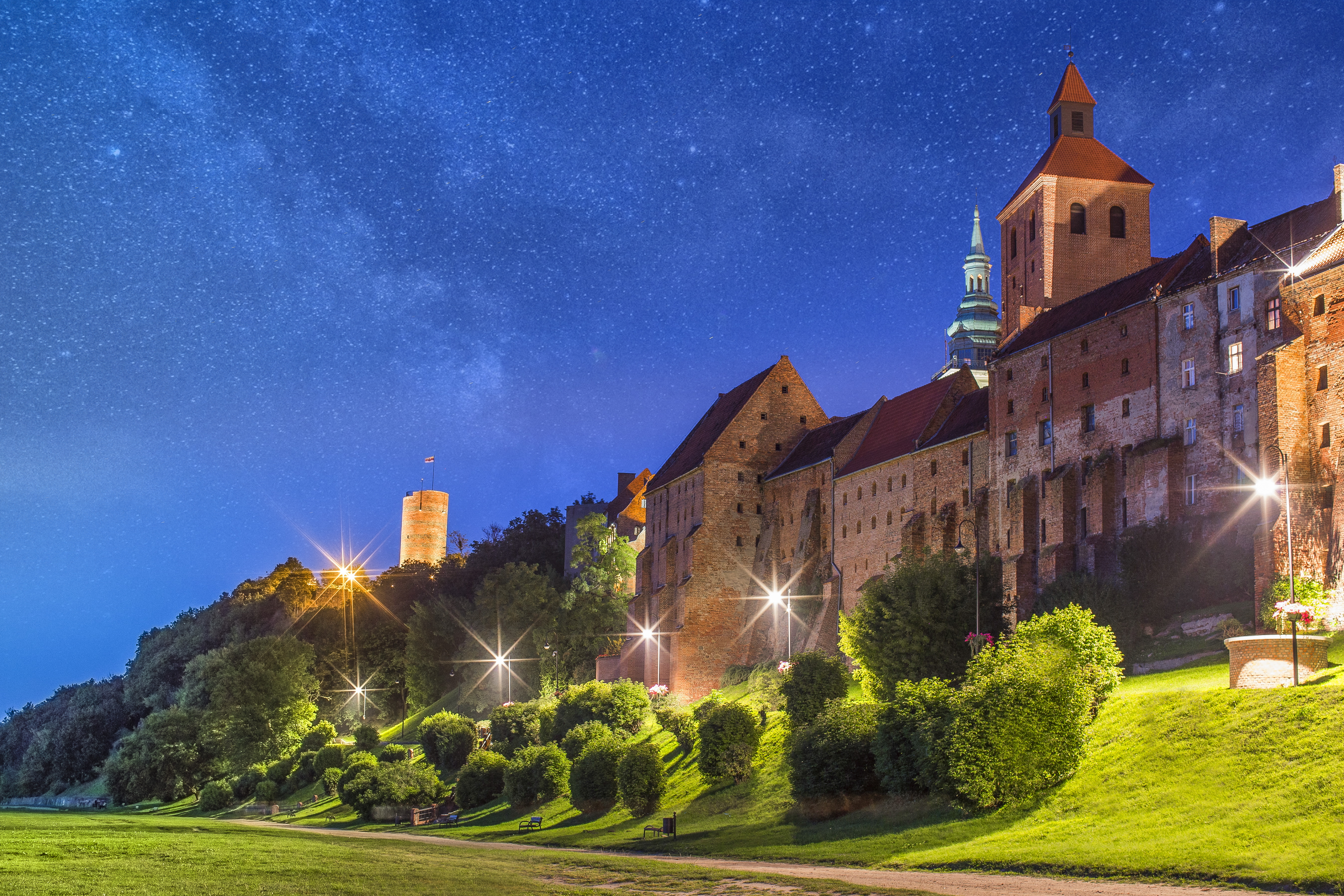
Grudziądz delights with a panorama of historic granaries picturesquely situated on the Vistula escarpment. Functioning as grain warehouses, over time they played an important role - they were incorporated into the city wall system, thus protecting access to the city. Fragments of the 14th-century defensive walls with the characteristic Water Gate, the only surviving city gate, can still be admired today. The city is part of the European Brick Gothic Route. On Castle Hill you will see the relics of the Teutonic castle and the reconstructed Klimek Tower. It is worth climbing to its top to see the extraordinary panorama of the city and the winding ribbon of the Vistula River.
The Vistula Trade Museum is a place that will allow you to look at the city from the perspective of the Vistula route, which was once an important trade route. The interactive exhibition, located on three floors, is located inside two historic granaries. As they functioned as a grain warehouse for centuries, grain became the common denominator of the exhibition. Here you will learn about the interesting history of the Grudziądz granaries, as well as the role they played in trade. You will trace the outline of the history of money (after all, it is an inseparable element of trade exchange) and return to the times of industrial prosperity of Grudziądz.
It is not without reason that Grudziądz is located on the Copernicus Trail. On March 21, 1522, during the Assembly of Royal Prussia held here, Nicolaus Copernicus delivered his treatise "On the Respect of Coins", in which he included the famous law that inferior money drives out better money. This event is commemorated by a bench with Nicolaus Copernicus, an economist, which can be found in the Grudziądz Market Square.
The sculpture of an Uhlan and a girl decorating the crown of the city walls is a reference to the city's cavalry history. In the interwar period, it housed the Cavalry Training Center - the most important military university educating the future cadre of this formation. What was the training like and what was the everyday life of a cavalryman like? You will find out about this by visiting the exhibition at the Abbesses' Palace . There you will find original cavalry uniforms, a collection of melee weapons and firearms, elements of cavalry equipment, equestrian accessories and personal souvenirs of the uhlans.
Fortification enthusiasts will be delighted with the 18th-century citadel, which is one of the most impressive objects of military art in Europe, and Fort Wielka Księża Góra.
Related routes

Gallery