Information
- Facebook: Grzybno/?locale=pl_PL
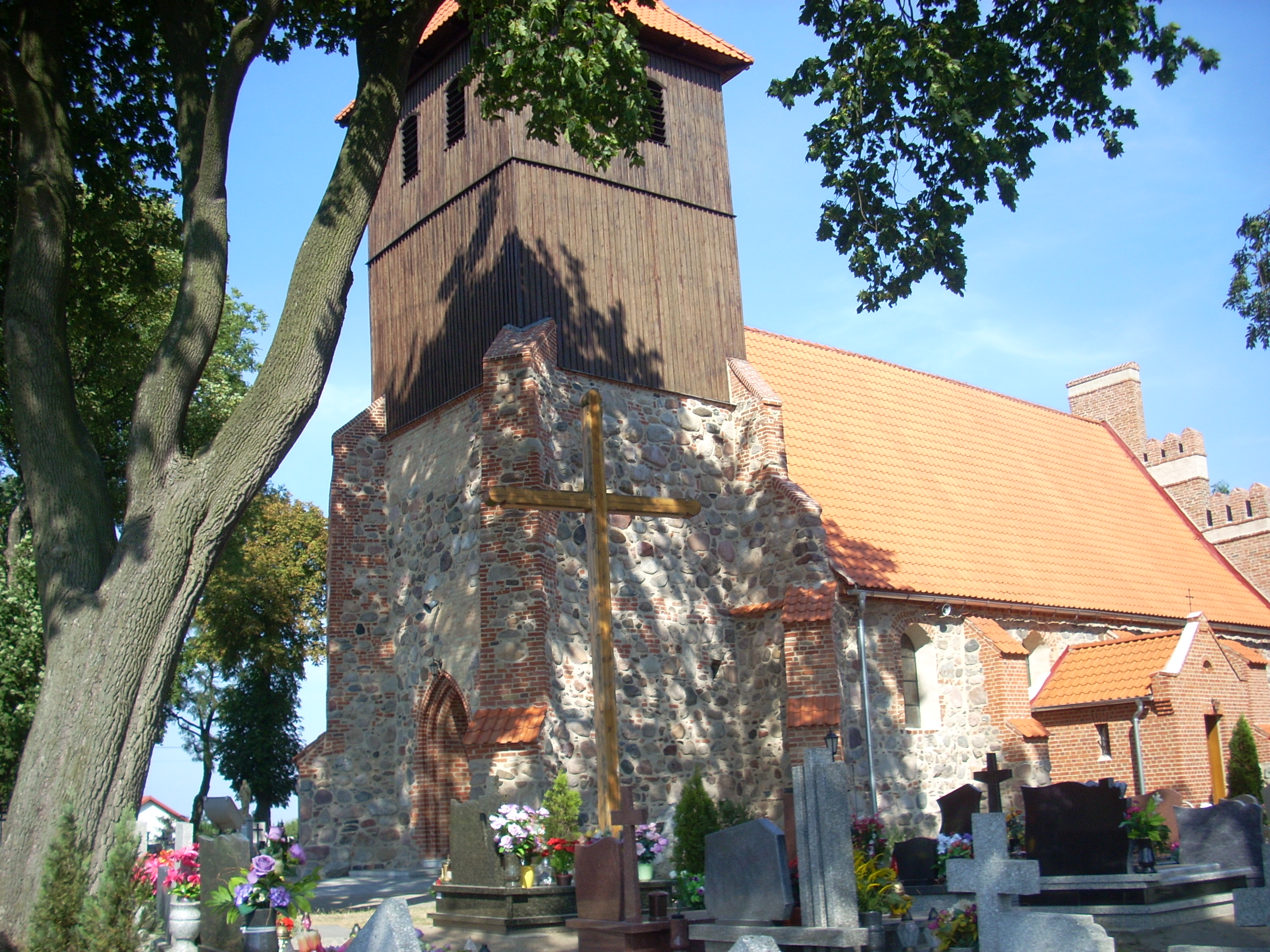
The village dates back to the Middle Ages, and its most important landmark is a uniquely beautiful Gothic church from the turn of the 13th and 14th centuries. Not much of the church's furnishings from the period of interest to us has survived, but the granite baptismal font from the 13th/14th century is sure to catch the eye of visitors. During Copernicus's time, the village belonged to the Chełmno bishopric. The figure of the great astronomer is also connected to some extent with Father Stanisław Kujot (1845-1914), an outstanding historian and president of the Scientific Society in Toruń, who also researched Copernicus and his times. Kujot was a long-time parish priest in Grzybno and is buried in the church cemetery.
Gallery